‘Tofsei HaOrit’ Program for Ethiopian Jewry
“Tufasei HaOrit” is a groundbreaking academic track within the master’s program in the Department of Biblical Studies at Tel Aviv University. The program focuses on the study of the sacred scriptures of the Beta Israel community — Ethiopian Jews — aiming to document, research, and make accessible ancient oral traditions that have rarely been explored in academic contexts.
Led by Professor Dalit Rom-Shiloni, in collaboration with Dr. Anbessa Tefera from the Department of Hebrew Language and Semitic Linguistics and Professor Erica Weiss from the Department of Anthropology, the program is carried out in partnership with the Ethiopian Jewish Heritage Center, the National Library of Israel, and the Koret Foundation, which proudly supports the initiative by providing full tuition and living stipends to participating students.
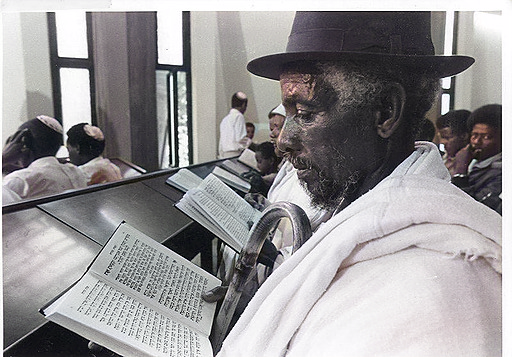
The term “Orit” (derived from the Aramaic “Oriyta”, meaning “Torah”) refers to the five books of Moses along with the books of Joshua, Judges, and Ruth — the most revered scriptures in the Beta Israel canon. The Orit is written in Geʽez, an ancient liturgical language no longer in spoken use. For generations, the Kessim — the spiritual leaders of the community — have preserved the oral traditions of reading, interpreting, and translating the Orit during religious ceremonies, Sabbaths, and festivals. These traditions have never been formally documented and are at risk of disappearing with the passing of the last generation of Ethiopian-trained Kessim.
What makes the program unique is its integration of academic study and community involvement. The cohort currently includes 11 students from within the Beta Israel community, among them two active Kessim — Kes Molaalem Tamait and Kes Samai Elias. Many students come from families of Kessim, bringing a deep personal connection to the heritage, which enriches the learning and research experience both academically and culturally.
The program focuses on two main goals: creating the first digital repository of Beta Israel’s sacred texts, many of which are privately held, and conducting comprehensive documentation of the oral traditions associated with the Orit. This includes filming interviews with elder Kessim trained in Ethiopia to preserve their knowledge and build a living archive accessible to scholars, students, and community members.
Tufasei HaOrit is far more than an academic program. It is a cultural preservation and empowerment initiative, revealing a rich spiritual legacy still alive within Israeli society — a legacy at real risk of being lost. Thanks to the unique collaboration between academia and the community, the program is uncovering rare insights with profound significance for both biblical scholarship and the broader Jewish heritage.
A special event celebrating the program’s work will take place from May 4 to May 22, 2025, at the Hallelujah Gallery in ANU – Museum of the Jewish People, featuring a public exhibition of the Orit belonging to Kes Aba Yitzhak Ayeso — one of the Beta Israel community’s most treasured spiritual texts.
The Koret Foundation is honored to support and partner with this pioneering initiative, helping to safeguard one of the most precious spiritual treasures of Je