By: Dr. Emma Zohar
Anyone who follows news related to the Holocaust has likely seen the troubling and saddening report that since October 7 there has been a 60% drop in the number of schools in the UK marking International Holocaust Remembrance Day. While in Israel the central Holocaust Remembrance Day is observed on the 27th of Nisan and only a few ceremonies take place on International Holocaust Remembrance Day, it is important to recall that on January 27, 1945, the Auschwitz extermination camp— which has become a clear and enduring symbol of the Holocaust—was liberated.
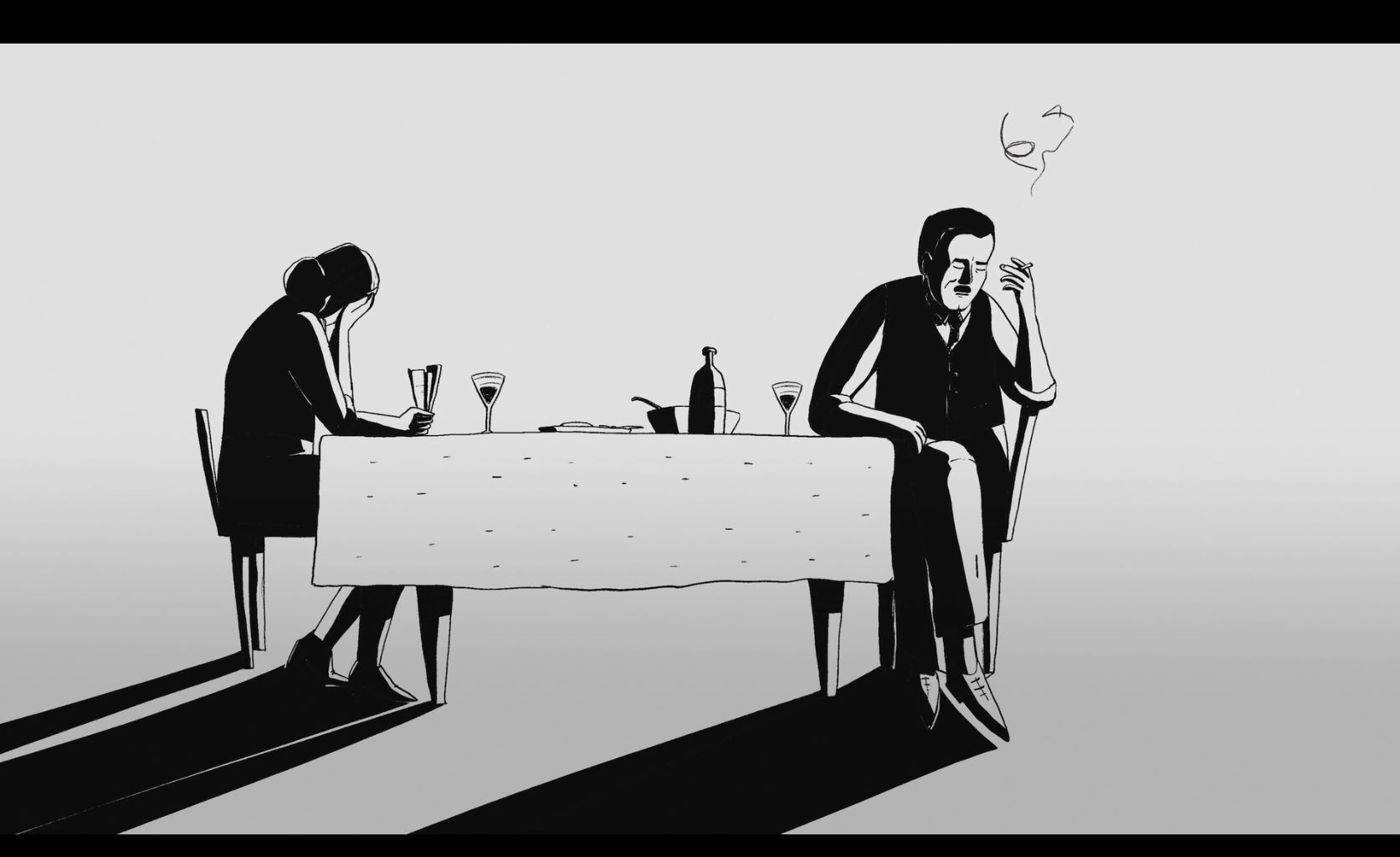
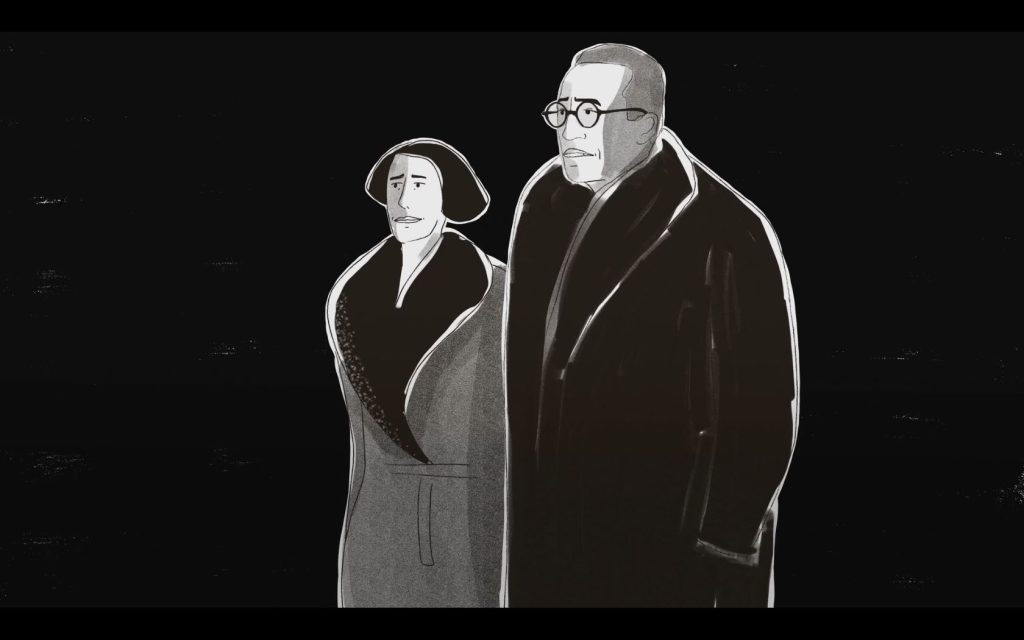
To mark International Holocaust Remembrance Day, we presented at the Koret Center for Jewish Civilization, in cooperation with Hillel Tel Aviv, a special screening of the film “A Contract with the Devil?”, which deals with the Haavara (Transfer) Agreement. The Haavara Agreement was signed in the summer of 1933 between the Nazi German authorities and the Zionist institutions operating in Mandatory Palestine. It created a mechanism that allowed Jews from Germany to immigrate to Palestine by converting part of their property into German goods exported to the country, rather than through a direct transfer of capital. In hindsight—especially with our knowledge of how history ended—the fact that the agreement was not formulated as an explicitly humanitarian rescue arrangement sounds chilling. However, in the summer of 1933, only a few months after Hitler’s rise to power, when the scale of the violence and murder that would follow was still unknown, the agreement operated within a political and economic reality perceived by many as a severe but solvable crisis. In this context, the agreement in fact enabled the immigration of tens of thousands of Jews from Germany during the 1930s, and already at the time— and even more so after the war—became a focal point of controversy surrounding questions of morality, responsibility, and action under conditions of extreme uncertainty.
The Haavara Agreement, for various reasons, is not a particularly prominent story in Jewish historiography. It usually appears on the margins of broader writing about the 1930s, the rise of Nazism, or the history of immigration and settlement. Yet its relatively marginal position does not diminish its importance; rather, it highlights its exceptional nature. It is an early episode that does not easily fit into clear narratives of victim and perpetrator, heroism or resistance. As such, the agreement confronts us with profound questions concerning morality, the boundary between good and evil, and the possibilities for action within a crisis reality in which there is no clearly right or wrong, just or unjust solution.
The Haavara Agreement is not the only episode in Holocaust historiography that presents moral dilemmas involving money, chances of survival, and direct—sometimes unavoidable—contact with what is perceived as “collaboration with the devil.” Other cases, better known in public memory and historiography, raised similar and sometimes even more extreme questions. The most prominent of these is the Kastner affair, at the center of which stood the rescue train from Hungary in 1944, through which the departure of approximately 1,600 Jews was arranged in exchange for payment and negotiations with the Nazi German authorities. Here too, those behind the initiative were not faced with simple choices of good and evil, but with decision-making within an extreme reality, where saving the lives of a few, negotiating with “the enemy,” and exercising judgment under pressure became an inseparable part of the very act of survival.
I would like to devote the next few minutes to another episode, less well known in Holocaust historiography and almost absent from public discourse, yet one that sharply illuminates the same moral questions of action, responsibility, and survival: the story of the Transnistria Orphans’ Train. The children of Transnistria were a group of thousands of Jewish children and adolescents, survivors of the camps and ghettos of Transnistria, who were rescued in the years 1943–1944, and many of whom eventually arrived in the Land of Israel.
The Transnistria region, located beyond the Dniester River, was transferred to Romanian control during World War II. Beginning in 1941, the Romanian government deported the Jews of Bukovina, Bessarabia, and northern Moldova—about 200,000 people—to the region. The deportees were initially housed in ghettos and later in what were called “starvation camps” in uninhabited swamp areas. Jews were subjected to forced labor and suffered from hunger, severe diseases, and violence. Already during the first winter after the deportations, about half of the deportees perished. Within this reality, Jewish organizations in Romania began to act to carry out a humanitarian effort to aid them.
From the very first stage, the Romanian government made clear that any release of Jews from Transnistria would be conditional upon the payment of ransom. This demand applied to children as well, with the ransom determined according to the number of those released. In 1942, attempts were made to free all the deportees or at least a large group of them, but the high financial demands, alongside the refusal of the British Mandate authorities to allow immigration on such a scale, rendered the plan impossible. As a result, a more limited solution took shape: the rescue of children and adolescents only. Initially, the plan spoke of about 5,000 children, and even preliminary agreements were reached regarding the allocation of immigration certificates, but this solution too encountered German opposition and political difficulties. Only toward the end of 1943 did the Romanian authorities agree to renew the effort, and even then under stringent conditions. The conditions dictated by Antonescu stipulated that only children aged 15 and under, proven to be orphans of both parents, would be permitted to leave. This requirement reduced the number of children to about 2,000 and made the payment of ransom an integral part of a selective release mechanism. Siblings were separated; children who did not meet the strict criteria were left behind, and many of them met their deaths.
The children’s rescue operation was approved in February 1944—let me remind you, the war was still ongoing. Delegations of representatives from the Jewish community in Bucharest were sent to the Transnistria camps, gathered the children, provided disinfection, clothing, and travel documents, and began removing them from the region starting in March 1944. The children were initially absorbed into Jewish communities within Romania itself and later arrived in the Land of Israel. Their journey included, among other things, voyages on illegal immigration ships that departed from Romania during 1944, and train journeys from Lebanon through Rosh HaNikra to the Atlit detention camp. The children were dispersed among various kibbutzim across the country according to their ideological or religious affiliation—except for one girl, Haya Winter, who managed to sneak onto the train under an assumed name and was sent to the home of her older brother, whom she had never met before, in Herzliya. Haya is the grandmother of my husband.
These three episodes—the Kastner affair, the Transnistria Orphans’ Train, and the Haavara Agreement addressed by the film—do not offer us a story of good and evil in their simplest sense. They place us before a reality in which the value of life stood in constant tension with money, ideology, and violent power structures. They remind us that in the 1930s and 1940s, decisions were not made with knowledge of the ending, but within deep uncertainty, scarcity, and extreme pressure. The history of the Holocaust is also composed of such moments, in which rescue was possible only partially, conditionally, and sometimes at a heavy moral cost.
In conclusion, I would like to thank Hillel Tel Aviv and Hillel Israel for the initiative to screen the film; Shay Lahav for the screenplay, and Ayelet Efrati for the production. And of course, thanks to Nava Michael-Tzabari for the idea for the film and for the research, and to the director, Aviad Levni. Aviad and Nava will also lead a creators’ discussion after the screening. And finally, thank you all for coming this evening. I wish you all an engaging viewing.